
All About Athletic Pubalgia - Sports Hernias
All About Athletic Pubalgia - Sports Hernias
Getting to the bottom of where groin pain is coming from can be a difficult task on your own, especially with how many different names and diagnoses there are. This article will zoom in on a sports hernia - also known as athletic pubaglia.
A sports hernia isn’t actually even a hernia in the traditional sense (where abdominal tissues push through an opening in the abdominal wall, most commonly in this area an inguinal hernia), but a tear or strain of the muscles and tendons in the lower abdomen. There are quite a bit of different tissues that could be impacted: fascia at the posterior inguinal wall, the rectus abdominis (6-pack muscle), the conjoint tendon (internal obliques and transverse abdominis), and the external obliques. The reason for a sports hernia is mostly thought to be an imbalance of the adductor (inner thigh) and abdominal muscles - as both attach to the pubic bone. Too much pull from the adductor, and not enough resistance from the above mentioned abdominal muscles creates a shearing force at the pelvis.
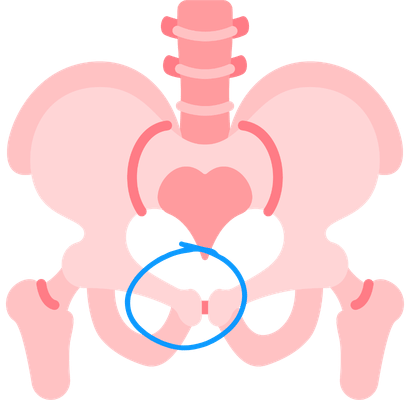
Risk factors:
-Sports: soccer, ice hockey, American football. Also common in other sports that require changing direction and speed like basketball and tennis, and repetitive sports like swimming and long distance running.
-Gender: more common in males
Symptoms:
-Lower abdomen, deep groin, and proximal adductor pain
-Activity related pain, improves with rest.
-Tenderness to touch of the pubic bone, rectus abdominis, conjoined tendon, and adductor muscles
-Pain with resisted sit uo
-Sometimes pain with coughing, sneezing, breath holding/bracing
Athletic Pubalgia diagnostic criteria, at least 3 of the 5:
Pain to touch at the pubic tubercle (at the point of insertion of the conjoint tendon)
Tenderness over the deep inguinal ring (middle of the hip crease)
Pain with no obvious hernia in the hip crease area
Pain at the adductor longus tendon (inner thigh)
Dull, diffuse pain in the groin, often radiating to the perineum (saddle area) and inner thigh or across the midline.
So what do you do if you think you have it?
-Imaging: X-rays rule out a bone issue, MRI can show tears/muscle issues, and ultrasounds can give further information regarding the soft tissues in the area.
-Physical therapy to improve range of motion, strength, and control.
-Limited evidence for cortisone injections (actually…there is mounting evidence that they are not good for you!). Some evidence for PRP.
If you are struggling with athletic pubalgia, give us a call at 203-557-9111 and lets talk about your specific case and what we can do to help!
References: