Beyond the Quick Fix: Why Your Chronic Back Pain Hasn't Solved Itself (and how we fix it!)
Beyond the Quick Fix: Why Your Chronic Back Pain Hasn't Solved Itself (And How We Fix It)
If you are reading this, chances are you’ve tried a little bit of everything to get rid of your back pain. You've tried the quick fixes and nothing seems to work, it hasn't been solved with anything you've tried.
Maybe you’ve spent weeks sitting on a heating pad, tried stretching your hamstrings until you were blue in the face, got manipulated by a chiropractor over and over, or spent hours on a physical therapy table with a hot pack on your back, only to be handed a sheet of generic exercises and sent on your way. You might experience temporary relief, but as soon as you go to lift your child, swing a golf club, or sit for a long car ride, that familiar, nagging ache returns.
Maybe you’ve seen a doctor or orthopedist and they said your x-rays and MRI’s look good and it is just a muscular problem. You’ve worked with your trainer only to have to limit what exercises you do and stopped your progress.
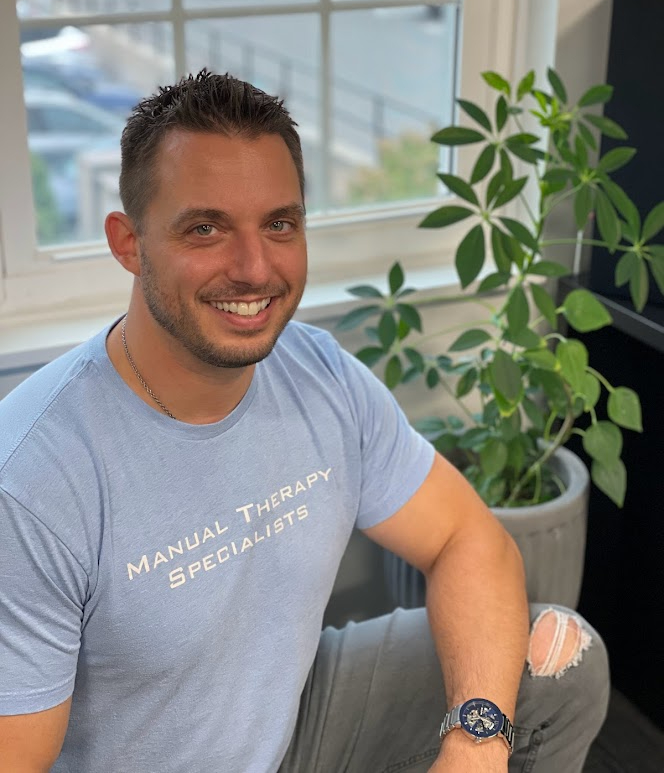
As a Certified Functional Manual Therapist (CFMT) and a lifelong athlete—from my days as a D1 collegiate gymnast and sprinter to powerlifting and trail running—I’ve spent over two decades looking at movement. I have also solved my own chronic back pain. In my 20+ years of practice, I can tell you one thing with certainty:
Chronic back pain is rarely just a "back" problem.
Here is why your chronic back pain persists, and how a true, hands-on functional approach can finally break the cycle.
1. Stopping at the Symptom Instead of Finding the Root Cause
Most traditional approaches treat the spot that hurts. If your lower back aches, the focus stays squarely on your lower back. But the human body doesn’t work in isolated parts; it functions as an interconnected chain. We look at what’s tight, what’s weak and poor movement.
2. What’s Tight? Mobility Issues Create Compensation
When you come into our clinic with chronic lower back pain, we don't just look at your lumbar spine. We evaluate:
Hip Mobility: If your hips can’t rotate properly when you walk, run, or swing a golf club, your lower back is forced to twist to compensate. Over time, that compensation causes micro-trauma, inflammation, and pain.
Thoracic Spine & Ribcage Flexibility: Stiff upper backs force the lower back to work overtime.
Pelvic & Sacroiliac (SI) Joint Alignment: Minor misalignments in the pelvic girdle transfer massive amounts of mechanical stress directly into the lower lumbar discs.
Your Low Back: We do look at your lumbar spine and determine what joints are tight. Occasionally it is tight at where your pain is but a lot of times it is the opposite side or the segment above or below where your pain is that is tight.
If a therapy program doesn't address why your back is taking the brunt of the force, the pain will always come back. Mobility issues can be one cause of compensation and back pain.
2. What’s Weak? Pain Changes How Your Muscles Fire
When you’ve lived with pain for months or years, your nervous system adapts. To protect you, your brain alters muscle recruitment patterns. It shuts down deep core stabilizers (like the transverse abdominis and multifidus) and forces larger, primary mover muscles to lock up in a constant state of protective guarding.
This is why "just strengthening your core" with standard sit-ups or planks rarely works for chronic back pain. You can't strengthen a muscle that your brain isn't effectively recruiting. Through various techniques and cueing, we can facilitate proper muscle engagement, rewiring those neuro-motor pathways so your body remembers how to move efficiently without guarding. We get the tiny stabilizer muscles to fire again and be strong so the overly tight muscles can finally take a break.
3. Poor Movement – Compensations and Imbalances can Increase Injuries
The body is smart. It will often learn to move differently to avoid pain. These movement patterns are learned and unfortunately when pain goes away, we don’t revert back to the older healthier patterns. Maybe you never learned to move efficiently in the first place or you overtrained and overstressed your body. Learning efficient movement patterns that de-load your back and put the weight elsewhere prevent injury from returning and reduce the irritation to an already painful system. Learning to move better reduced pain and can prevent it from returning.
So, how do you fix back pain?
Passive Care Doesn't Create Active Change
Hot packs, electrical stimulation, and passive stretching feel great in the moment, but they do not change tissue structure, joint mechanics, or movement habits.
Real, lasting recovery requires a multi-step approach:
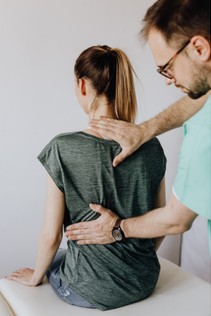
Manual Therapy: Hands-on joint mobilization, soft-tissue work, and visceral/neural mobilization to restore structural mobility and clear mechanical blocks.
Functional Re-education: Re-educating and training those newly gained ranges of motion with targeted motor control exercises so your body accepts the change. Teach you to use the little muscles.
Progressive Loads/Specific Exercise: Once you can use the little muscles and new motion, we reinforce it with specific exercises to reinforce the proper pattern to retrain it as your default. Then we load you progressively to make you strong without going backwards. We also add in postural and movement education to further reinforce the healthy pattern.
The MTS Difference: One-on-One Dedicated Care
At Manual Therapy Specialists, we don't double-book patients or pass you off to aides. When you walk through our doors in Fairfield, you get one-on-one, hour-long treatments in a private room directly with an expert therapist.
We take the time to analyze your posture, your gait, your sports-specific mechanics, and how you move in daily life. Whether your goal is to hit the trail, get back in the gym, dominate on the golf course, or simply live without that constant, draining ache, you deserve a tailored solution rather than a cookie-cutter routine.
Ready to Stop Managing Pain and Start Solving It?
You don't have to accept chronic back pain as a permanent part of aging or an active lifestyle. If you're ready to find the root cause of your pain and get back to doing what you love, we are here to help.
Call or text us today at (203) 557-9111 or visit our online booking site to schedule your comprehensive evaluation.