Bulletproof Shoulders for Grappling & Wrestling
Bulletproof Shoulders for Grappling & Wrestling
The shoulder is one of the most common areas of injury for wrestlers and grapplers. Anyone who has spent more than a few practices around the sport knows why.
Wrestling places an incredible amount of stress on the shoulder. Athletes are constantly exposed to twisting forces, awkward positions, rapid changes in direction, and repeated loading through the arms and shoulders. Over the course of a season, that adds up.
Having grown up competing and coaching in wrestling—and now working with wrestlers as a physical therapist—I wanted to share some of what I've learned about helping athletes manage and prevent shoulder problems.
We'll discuss how to think about shoulder injuries, what to do when shoulder pain first appears, and some of the basic exercises and progressions I use with many of my athletes.
Understanding Shoulder Pain
If we take a step back from wrestling and look at shoulder pain in the general population, there are many different diagnoses that can be associated with it.
You may have heard terms like:
Rotator cuff injury
Labral injury
Tendinitis
Impingement
Shoulder instability
Frozen shoulder
These terms can be useful, but identifying one specific structure as "the problem" doesn't always tell us what we should do next.
In many cases—especially when pain develops gradually rather than from one specific traumatic event—the issue isn't necessarily that something has been torn or structurally damaged.
Sometimes the shoulder is simply being asked to handle more stress than it currently has the capacity to tolerate.
This can happen when an athlete has:
Increased training volume
Not allowed enough time for recovery
Developed strength imbalances
Repeatedly practiced difficult positions
Not developed enough strength to control those positions
Returned to training faster than the body was ready for
For these types of injuries, I find it more useful to ask:
"What does this athlete need to be able to do that they currently can't?"
Rather than focusing exclusively on the name of the injury, we can look at the athlete's ability to produce force, absorb force, control movement, and tolerate the demands of their sport.
Two Common Patterns I See in Wrestlers:
Although every athlete is different, two patterns come up frequently in my wrestling and grappling athletes.
1. Shoulder Pain With Power Deficits
This type of shoulder pain may previously have been described as tendinitis or a rotator cuff problem.
It often develops when the shoulder is exposed to a combination of:
High training volume
Insufficient recovery
Muscle imbalances
Repeated exposure to challenging positions
Strength or conditioning deficits
Think about it this way:
Your shoulder may be capable of handling a certain amount of stress when you're fresh.
But if you're practicing six days a week, competing on the weekend, and repeatedly putting your shoulder into difficult positions, that same shoulder may eventually struggle to keep up.
The problem isn't necessarily that the shoulder is "broken."
It may simply be overloaded.
2. Shoulder Pain With Stability Deficits
The second pattern I commonly see involves difficulty controlling and stabilizing the shoulder.
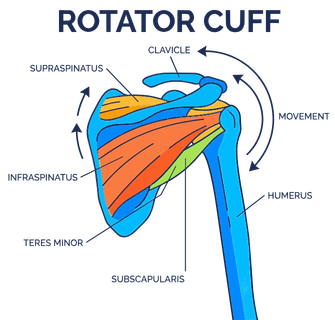
This can sometimes be associated with what has historically been called labral injuries, chronic subluxations, or multidirectional instability.
Wrestlers are incredibly strong athletes. They spend countless hours developing the ability to generate force, explode through positions, and move their opponents.
But generating force is only half of the equation.
You also have to be able to control it.
The shoulder needs to be able to stabilize itself while the body is being pushed, pulled, rotated, or thrown into unexpected positions.
If the muscles responsible for controlling the shoulder aren't adequately conditioned for those demands, the joint may have difficulty managing the forces placed on it.
Over time, this can contribute to irritation, pain, and a feeling that the shoulder isn't as reliable as it should be.
Building a More Resilient Shoulder
Every athlete I work with receives an individualized evaluation.
I want to understand:
What happened?
Was there a specific injury or did the pain develop gradually?
What did training look like before the pain started?
How much are you practicing and competing?
What positions or movements make it worse?
What does your strength and movement look like?
What does your shoulder need to be able to tolerate for your particular sport?
From there, we can build a rehabilitation program around the athlete rather than simply handing them a list of "shoulder exercises."
That being said, there are several types of exercises I frequently use for shoulder strength, control, and resilience.
1. Bear Plank Progressions
Why I like them:
Bear plank exercises teach the shoulder to support and control the body while maintaining contact with the ground.
They also provide a great way to progressively challenge shoulder stability without immediately jumping into high-speed or high-load movements.
Basic progression:
Hold → Shoulder Taps → Crawls
Watch the Bear Plank Progression
As the athlete improves, we can gradually increase the amount of movement, speed, and challenge.
2. Scapular Strengthening
Your shoulder blade plays an important role in how your shoulder moves and functions.
Strengthening the muscles that control the shoulder blade can help develop better coordination and balance throughout the shoulder region.
Basic progression:
I's → T's → Y's
Watch the I's, T's & Y's Progression
These can be performed in different positions and with different amounts of resistance depending on the athlete's current level.
3. Rotator Cuff Strengthening
The rotator cuff is made up of several smaller muscles that help control and stabilize the shoulder joint.
These muscles may not be the strongest muscles in your body, but they play an important role in keeping the shoulder centered and controlled as you move.
Basic progression:
Side-lying → Standing at 90° → 90/90
Watch the Rotator Cuff Progression
The goal isn't simply to make these muscles stronger.
It's to gradually teach them to control the shoulder in positions that look more and more like the demands of wrestling.
4. Plyometric Training
Strength is important.
But wrestling doesn't happen slowly.
Your shoulder needs to be able to receive force quickly and respond to it efficiently.
This is where plyometric training can become valuable.
Plyometric exercises teach the body to absorb and redirect force with speed and coordination.
General examples:
Medicine ball catches
Wall rebounds
Plyometric push-ups
Controlled landing drills
Watch a Shoulder Plyometric Example
The specific exercise should match the athlete's current level and the demands of their sport.
Strength Is Only Part of the Equation
One of the biggest lessons I've learned working with wrestlers is that being strong doesn't necessarily mean you're prepared for everything your sport can throw at you.
A resilient athlete needs to be able to:
Produce force.
Absorb force.
Control force.
Recover from force.
That's especially true in wrestling and grappling, where the body is constantly being placed into positions it didn't necessarily choose.
The goal isn't to make an athlete completely immune to injury. That's not realistic.
The goal is to progressively build the strength, coordination, mobility, and capacity necessary to handle the demands of the sport.
And that process should look different for every athlete.
These exercises are simply examples of tools that may be useful as part of that process—not a substitute for an individualized evaluation.
If you or your athlete is dealing with shoulder pain during training or competition, we'd be happy to help you understand what's contributing to it and determine an appropriate path forward. Give us a call or text at 203-557-9111.