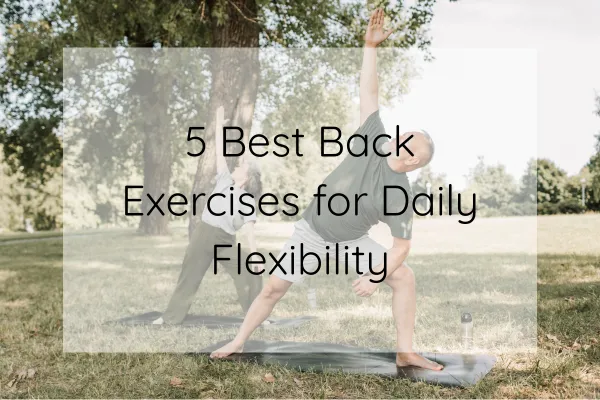
5 Best Back Exercises for Daily Flexibility
5 Best Back Exercises for Daily Flexibility
Exercise and movement have consistently been shown to play a major role in reducing chronic back pain and stiffness. However, in a world where we’re constantly inundated with new information, the number of exercises we “should do,” “could do,” or have “been told to do” can quickly feel overwhelming.
Too many options without clear direction can leave us feeling stuck rather than motivated.
That’s why I wanted to share the five movements I personally use every day to keep my back feeling loose, strong, and prepared for whatever the day brings. Below, you’ll find links to videos demonstrating each movement, along with a brief explanation of why they’re effective.
The 5 Exercises
Why These Exercises?
1) Tissue Mobility
Much of the stiffness and discomfort we feel in our backs comes from accumulated tension that isn’t regularly dissipated through movement.
Similar to how we’re encouraged to floss our teeth daily, I view these exercises as a form of daily maintenance for our tissues. When we consistently move through these patterns, our overall sense of flexibility improves.
Our bodies are designed to move in three primary planes:
Forward ↔ Backward
Side ↔ Side
Rotation (side ↔ side)
In real life, these movements rarely occur in isolation—they’re blended together in everything we do. That’s why it’s important to regularly expose your body to all of these directions, helping it stay adaptable and ready for daily demands.
Exercises 1, 2, and 3 specifically target these movement planes.
2) Circulation and Blood Flow
Prolonged sitting and reduced activity levels can limit circulation—a reality for many people.
When circulation slows, both blood flow and lymphatic movement (your body’s waste removal system) can become more stagnant. With that stagnation comes stiffness—and eventually can become discomfort.
Incorporating even small amounts of daily movement will help restore circulation and keep tissues well-nourished.
Exercises 1 and 5 are particularly effective for promoting circulation and gently re-energizing the system.
3) Strength and Stability
The back plays a central role in stabilizing the entire body. Building sufficient strength and control helps distribute forces more evenly and reduces unnecessary strain.
Just as importantly, learning how to both engage and relax the muscles around the spine is key. This balance is best developed through intentional, controlled movement.
Exercise 4 (Rotational Lunge Pivot) is a great example of integrating strength, control, and coordination.
In Summary
I encourage you to try one—or all—of these movements for about 10 minutes a day over the next month and see how your body responds.
They may feel a bit awkward at first, and that’s okay. With consistent practice, most people notice improvements not only during movement, but also in how their body feels at rest.
As always, if you experience discomfort or feel unable to perform any of these movements, we’re here to help. Feel free to reach out and schedule an in-person visit so we can better understand what your body needs.